Thursday, June 23, 2016

THE FLASHCUBES: The 1997 BRIGHT LIGHTS Interview

 https://blogger.googleusercontent.com/img/b/R29vZ2xl/AVvXsEhpwDihy9mtnTK3vOW-bZdBtVj-DxX1iizsdSxjgM3S7WTZHtunPf4YfVHx_KT9WowuEJWKvtNKOs9PTUEJmUVFeAK0UaYOTdaZG6v3IFTAWZcVI4_p5pP5dHtBEhb3FdFGrlRU0zmdhrc/s400/Flashcubes2.gif

With the ol' clock on the wall ticking closer and closer to our big 2016 BRIGHT LIGHTS! Syracuse new wave rock 'n' roll reunion party on July 3rd (as detailed here), let's dig deeper into the archives for some first-person accounts of the late '70s/early '80s local scene that BRIGHT LIGHTS! celebrates.  These interviews were conducted by me in 1997, as background for a Syracuse New Times article on The Flashcubes and other great bands playing around the 'Cuse during that three-chord-charged time frame; it was published the week of The Flashcubes' 20th anniversary show, which was also a release party for The Flashcubes' anthology CD Bright Lights.  The article itself can be found here.  This is the first publication of the complete interviews.

Hey, wanna go to the BRIGHT LIGHTS! show?  Of course you do!  Get yer tickets, man!

I don't think there would have been a Syracuse new wave rock 'n' roll scene if The Flashcubes hadn't jump-started it in the first place.  Then and now, The Flashcubes are guitarists Paul Armstrong and Arty Lenin, bassist Gary Frenay, and drummer Tommy AllenLet's have a chat with Gary and Paul of Syracuse's own power pop powerhouse, THE FLASHCUBES!

We've all heard recent claims that Syracuse is not a music town.  Maybe that's true now, but I don't think it was true in the late '70s.

PAUL ARMSTRONG:  Syracuse is definitely a music town.  It's just there's no venue to play it at.

When did the Syracuse new wave begin?  I've dated it from The Flashcubes' debut on September 1st, 1977.

PA:  I personally would say, that was the first Flashcubes date, but to me, as a fan, the first thing that happened in Syracuse that would be considered new wave--and this was actually, it happened on the same day that The Flashcubes were named--is there was a party in the building in Armory Square where The New Times used to be.  And there were two bands playing there, and they were punk bands.  There was one called The Cuban Heels, which was Steve Latham, and he had this band The Cuban Heels with another guy, some other guy from North Syracuse.  And they were like trying to be The Velvet Underground.  And there was this big loft party.  I don't remember the other band.  Maybe Gary remembers.

GARY FRENAY:  I don't remember either.

PA:  But they called the party "Punk City."  And there was like this loft thing going on.  There were two bands playing in two different rooms.  And me and Gar and Art went, but also the guys who ended up being in New Math, who were friends of mine from Rochester, they came down.  And the beginnings of the Syracuse punk scene, I think, could almost be brought back to that night.  Because that was the night that we were all hangin', the guys from New Math were hangin'.  We had a party at my house beforehand, and it was at that point when I tried to take a picture of everybody that we came up with the name "The Flashcubes."  Because we had this band with no name, and I wanted to take everyone's pictures, and I said, "Where's my flashcubes?"  And Gar says, "That's it!  That's our name, The Flashcubes!"  And then Kevin [Patrick] from New Math said, "No, there's already a band called The Flashcubes."  And I said,"Who?"  And he goes, "Us!"  'Cause they didn't have a name at the time either, they weren't New Math [yet].  And I think that probably happened maybe some time in July or August of '77.

GF:  Yeah, right around there.

PA:  That was the first real punk happening that I know of in Syracuse.

I remember reading about The Cuban Heels some time later, in the local fanzine Poser.

PA:  There was another group too, and I cannot remember who it was, except to know that the drummer in that other band had a thirty-inch kick drum.  I can't remember their fuckin' name, though.

GF:  I remember a blond lead singer who seemed more rock than new wave to me.  And I didn't really like them.  I liked Steve Latham's band a lot better.

PA:  Yeah, Steve Latham's band, The Cuban Heels, they were a true Velvet Underground, you know, sunglasses, pointy shoes, leather pants, androgynous type of punky type of thing.  As opposed to the other band, which was more like a hard rock band trying to be a little punky.

So The Cuban Heels actually were the first punk or new wave band in Syracuse, even before The Flashcubes?

GF:  I would possibly say that, yeah.  Because I don't know about The Penetrators, and The Drastics and stuff, I think, sort of came along after us.

PA:  Well, also, Arty was in Talisman with Steve and Ed [Steele], and I used to actually play with them from time to time, and this is a year before the 'Cubes.  We were doing like Eddie and the Hot Rods covers, and "She's My Gal" by The Gorillas.

GF:  But that was because of you, right?

PA:  That was because of me though, yeah.

If I remember right, some time around 1980 or so, local tabloid The National Rag said that no one person is more responsible for bringing the new wave to Syracuse than Paul Armstrong.

GF:  I would agree with that, because Paul had that England connection, because he was from there and had been over there.  And, I mean, we were both always big British rock fans, but Paul, you really grabbed on to the whole new wave thing before anybody I knew.

PA:  Right.  I went to England in '76 with long hair and a Van der Graaf Generator fan, and I came back with short hair and being a Clash fan.  But I also had the perfect stage for helping to do that, because I worked at Gerber Music, and I was in charge of doing the ordering and doing the displays. So the displays went from being Kansas and Styx to being...

GF:  Sex Pistols and The Jam.

PA:  ...to all of a sudden having every 45 that Jem Records offered was at the front of the store, with a little explanation about why that record was cool.

GF:  It was a real influential position for all of us to be in.  Not only were we suddenly going to be in a band, but we were working in a music store where music fans came in, and we could expose them to this music.

PA:  Next to The New Times, that was probably the number one thing that helped The Flashcubes go, was the fact that me and Gary and Tommy [Allen] were all working at Gerber's, and it was the perfect promotional vehicle.

GF:  But even with that, it was still a really hard sell, because Syracuse, then as now, was always a very conservative town.  And it really took...I mean, I don't know if this has been documented elsewhere, but The Flashcubes, when we started, we were playing to a bunch of drunken people out at The Brookside on a Thursday night, who were tanked up and thought we were sort of cute, but didn't really get it in any major way.

PA:  There was probably ten people that got it.  The rest of the people were curiosity-, novelty-seekers.  They came out, not so much to make fun of us, but sort of to laugh along with us.  It wasn't really considered a musical thing.

GF:  Because, when it really happened though was when it got written up up on the [Syracuse University] hill.  And the SU kids who were from downstate, from Long Island and New York City, and knew all about Blondie and Television and The Ramones and all that, suddenly went, "Oh my God, there's a punk band in town?!"  And it was like a bus showed up the next week at The Brookside.  Suddenly all these different people we'd never seen before showed up. They were all dressed just like, you know, the whole punk scene in New York.

PA:  Spitting at us, throwing stuff.

GF:  And going completely crazy.  And we were like, "Wow, where'd this scene come from?" [laughs]

PA:  Yeah, there was Dennis and Rita, I remember them as being the first, but they had a whole entourage of people that were like New Yorkers.

GF:  Yeah, Martta and Amy and all of them.

PA:  Yeah, Martta Rose and Penny Poser and that whole crowd.

How did Mark Roberts (later to become Buddy Love, of Buddy Love and the Tearjerkers) come into this?

GF:   He was a teacher's assistant, a TA up at SU.  And was just, I think, hipper than most people up there.

PA:  I think he sort of came along with this whole SU crowd.

GF:  I think he heard from the students, and he was always keen to find something cool going on.  He was a huge Lou Reed fan, you know, stuff like that.

PA:  Actually...I think Mark Roberts actually was someone that we knew that used to come into Gerber's and talk about hip records, too.  Maybe it was the SU connection, but I think he was also a Gerber's customer.  Like Ducky Carlisle, the way we met him was he was a Gerber customer.  He used to come in with his little goatee and wire-rim glasses, buyin' drum sticks.  And we talked him into comin', you know, we told him about our band and he told us about this cool band he had, The Ohms.  And I actually went to see them at a SU Battle Of The Bands amateur night, and walked in and they opened with "I Saw Her Standing There," like at 120 decibels, and thinking, "Man, this is great!"

GF:  [laughs]  The other thing, I think Gael [Sweeney] and Cathy [VanPatten, both later of The Poptarts] were students of Mark's, and I wondered if maybe they, you know...I don't know who influenced who there.

PA:  Another person who we're not mentioning here, but someone who was right there at the beginning, and really another person who sort of came from the heavy metal or hard rock arena, but definitely grabbed on to the new wave thing right off the bat, pre-Flashcubes, is Chris Goss.  Because he had a band, as early as '75, called Riff Raff, which was basically The Drastics with a different name.  And they were doin' Aerosmith covers.  But right around the same time, I mean, right along with Aerosmith covers they were writing their own material, which was starting to get a little punky and less hard rock.  I mean, Chris Goss was right there from the beginning also.  He's someone in Syracuse.  I still can't believe that he, you know, with Masters Of Reality taking off and him being who he is, that he doesn't get any recognition for that.  But he was there, at that Punk City party with The Cuban Heels.  I'm sure he was there.

GF:  Oh, he was there.  No question about it.

PA:  Well, actually, Steve Latham ended up being the manager for Masters Of Reality.  And he was the one that made them happen by getting 'em a whole bunch of New York City gigs, so there's a definite tie between The Cuban Heels and Chris Goss.

GF:  Yep.

The Flashcubes seemed to be at the center of the scene as it developed.  Is that a fair recollection?

PA:  Yes.

GF:  Yeah, I think so.  I think we were able to break out and achieve the most the quickest.  I mean, we got right out of here within six months of forming and were playing in other cities, playing in Boston and New York, and making contacts with bands and bringing them back here.  And then later that summer bringing The Romantics to town.  I mean, we were sort of taking on stuff that other bands hadn't really gotten to that point yet.

PA:  I think musically there were other bands that were into it as much as we were, writing their own tunes and all of that, but I think we were the most driven in a career sense.  We were the ones that were getting the gigs, hiring the other bands to play with us, making the contacts, you know, talking the guy at The Brookside into bringing The Ramones and The Runaways in, calling up [promoter] Chuck Chao and having him...you know, he didn't know who the hell The Police were, but we knew that they were cool because they were on IRS Records. and we were sort of the catalyst for making a lot of it happen in a business sense, not in a musical sense.

GF:  Yeah, I mean, we were inspired by everybody else anyway, but it was just that we had the most energy and the most juice going, I think, at the time, and it was so cool, because when they finally started to see that they could sell these bands that would come through, because we were the most notable band around here and we had the biggest following already, we would get to play with every one of them.  And then we would be able to sort of do exchange things, and go and play with other bands elsewhere.  It was a great situation to be in.  It just happened really quickly, and sort of naturally.

Tell me a little bit more about the genesis of The Flashcubes' popularity, for lack of a better description:  of going from being this unknown band that people sneered at, to achieving some level of recognition.

PA:  One thing I think to keep in mind is our name recognition is probably greater today than it was at any point while we were playing.  Definitely.  I mean, especially with the power pop revival going on, thanks to [writers like] the Jordan Oakes and the Pat Piersons and all those, and [record label guys like] the Bruce Brodeens of the world.  So we're definitely more popular now than we were then.

I remember at the time reading a lot of really snide remarks about The Flashcubes initially, and then moving to a point where Syracuse New Times writer/editor Mike Greensteen named you Band Of The Year for 1978.

PA: I don't know if we ever while we were together really achieved that much popularity in Syracuse other than at Syracuse University.  We could make some major money and pack the house at The Jabberwocky or The Orange.

GF:  Well, The Firebarn [downtown] we did pretty good at.

PA: Oh, The Firebarn, yeah, that's right.  But there were still some lean times.  I think we actually, before the whole thing imploded, started building a little bit of a following like in New York and Boston.  We played in New York and Boston probably 15 or 20 times.  I don't know, we can go back and count the dates, but there's numerous dates in each one of those cities.  And, I mean, living here in Boston, I still to this day run into people that saw The Flashcubes back then, and they're just, you know, catching up with me now.  It doesn't happen all the time, but it does happen.

GF:  Yeah, it happens to me, too: that I'll meet some new person I've never met before, and they'll say, "Well, so have you always done acoustic music?"  And I'll go, "Well, no, I was in bands.  I was in The Flashcubes."  And I have no idea who this person is, and they'll go, "You were in The Flashcubes?!"  Like people in Syracuse just seem to know about the band.  Like, it seems to be, you know, unlike other bands--like say, pick a band from back then, Alecstar, 805, whatever--the names don't necessarily live on in the same way [as] The Flashcubes, I think because it was such a cool factor to the new wave thing, and we were identified with that, so it just seemed to live on.  The other thing about, Carl, what you were saying about why the band got popular, I think, at least with the scenesters--the college kids I was talking about--we were sort of "their" new wave band, their Ramones or whatever.  But I think the fact that we did originals, and the fact that we were not just a reflection of some other band's material, but we were our own thing.  And the only place you could hear that stuff was to come and see us, if they wanted to hear "I Need Glue" and "Damaged Beyond Repair" and "I Don't Want To Be A Human Being" and Social Mobility" or whatever.  Those were Flashcubes songs, and you had to go to those clubs; we didn't have records out.  You had to come and see this band, and everybody was telling their friends about it:  "They got these cool songs, they're great, you can do The Jumping Jack," whatever.  And I think the originals made a big difference, and we were like one of the only bands that was just going out there and doing 90% original music.

PA:  And also, the perspective of looking at it now, 20 years later, we realize that The Ramones are world-famous, and that The Romantics, you know, have the Budweiser commercials, and all these bands we were playing with went to some major status which we never achieved.  But at the time, if you go back to 1977 or 1978, we were at the same level as The Romantics; maybe not The Ramones, because they had a major deal.  But a lot of these bands, like The Romantics and The Police and a lot of these other bands,  they were in the same boat as we were.  They were doin' it themselves, gettin' in the van and drivin' across the country.  They were just fortunate enough to take it a couple of levels beyond.  But at that time, we were at the same level as they were, so the fans really got behind us; they were hoping that we'd become what The Romantics or The Police or 999 or any of these infamous type of people were.  Not that 999's infamous.  They are to me, but....

GF:  The Jam.

PA:  The Jam, yeah.  Someone like that.

You mentioned doing mostly originals.  Was that a tough sell getting gigs?

GF:  I don't know, we got gigs in a different way.  Like, we couldn't really sell ourselves...I mean, even when we first started, and we didn't have as many songs because we just hadn't written as many yet, even the covers we were doing weren't anything [well-known].  I mean, we were doing, you know, songs by The Rings and Eddie and the Hot Rods and Chris Spedding and stuff.  I mean, nobody had heard of 'em anyway, they might as well have been originals.  So we had to sell the band in a different way.  We had to identify ourselves with the new wave thing and say, "This is a new thing, it's a real energetic thing, it's blah blah blah."  So we could never sell ourselves with the repertoire that people knew.

PA:  Gar, I think another way that we would have sold ourselves--as you know, we couldn't really sell ourselves on the music--the club owners were all interested in the bottom line, just like they are now, and that was makin' money.  And we'd go in there and say, "Hey look, you put us in here on a Wednesday night, we're gonna get a hundred people in here that are gonna be dancin' and sweaty and drinkin' beer."  And I think it was more of a business thing, that the club owners saw that we were a much better chance to bring some people in and sell some liquor.  I don't think that too many club owners that we dealt with really got our music.

GF:  Yeah.  And if you go back and look at the gig list, you know, for the first three or four months we played the same two or three clubs.  We played The Brookside regularly, we did The Boardwalk a few times, we did The Poor House North.  It was just stuff that wasn't happening in a big way, until we got the following from SU.  And then [promoter] Dave Rezak got interested and said, "Well, I've got this band, they've got this huge following in Syracuse, you can get people out."  "Well, what songs do they do?"  "Well, you won't know any of the songs, but they got a following."  And it's like that was the way that we were able to be sold.  But for the first three or four months there, it was a really hard sell.  I mean, we played gigs for $50, we played for anything just so we could say we were playing and so that the people we were telling about could come and see us.

You played The Ramones/Runaways gig at The Boardwalk for free.

GF:  Yeah, that was probably right.

PA:  I think we probably played it for free, and also threw in the use of our PA [laughs].  I'm 99% sure we had our PA there for them to play through, and a lot of the word of mouth and all that, and did it for nothing.  So it really cost us money to do it.

Another thing:  on the one hand in Syracuse, it made it hard to get gigs by playing original music.  But our goal, even though we wanted to be popular in Syracuse and play Syracuse, we were looking well beyond that.  I mean, the only way to get gigs in New York or in Boston or in Philadelphia or a major city was to play originals.  You aren't getting a gig there by doing Eddie and the Hot Rods covers.  Syracuse was our launching pad, it was our home base, but we were really looking beyond that.  So we had to focus on the originals if we wanted to take it out of the Central New York area.

GF:  And I think that set us apart from other bands, too, because we had a larger scope.  We had our sights set on larger things than a lot of Syracuse bands, I think, ever do.  You know, if they can get a gig at The Poor House North, that's great, you know, they'd get free beer.  I mean, I've got tapes of us on interviews on 95X saying, "Well, if we don't have a deal in six months we're gonna give up."  We just thought we were gonna conquer the world immediately.  We were so completely cocky.  But I think any great rock 'n' roll band has to have a lot of attitude.  And we had a lot!

PA:  Attitude works if you become The Beatles; and [otherwise] you look like idiots like we do [laughs].  I mean, that attitude only works if...well, as Reggie Jackson says, "It ain't braggin' if you can do it."  We were braggin' and we hadn't done it yet, and unfortunately we never did do it.  But you have to that attitude.

GF:  You've gotta believe in yourself to the max if you want anyone else to believe in you.

There were some times when 95X got behind you, and gave you some airplay.  Dave Frisina played your demo tape in its entirety one night.

GF:  Right.  And after that they played some of the tracks from that--"She's Not The Girl," "No Promise"--like they were regular songs.  I mean, I've got radio clips that we taped from back then, saying, "And after that you heard Van Morrison, and before that, The Flashcubes."

PA:  I vividly remember standing up on a ladder two stories up in the air, painting the side of Dian [Zane]'s house an ugly tan, with 95X blasting across the yard, and having "No Promise" come on the radio in the middle of rotation, like after Kansas and before Bob Seger, and almost falling off the ladder.  It was one of the pinnacles of my life.

Let's talk a bit about the other bands of that era, and your recollections of them.  Let's start off with The Ohms:  guitarist Zenny Caucasian, drummer Ducky Carlisle, and bassist Rick Suburban (later replaced by Keith Korvair).

GF:  Well, The Ohms were just amazing.  My two favorite songwriting bands were The Poptarts and The Ohms; for sheer, sheer pop songs, they were great.  But The Poptarts, you know, just didn't have the chops to really deliver 'em live, they were sort of learning as they went.  So even though there was a certain charm to them, it didn't really move your butt the way The Ohms did.  I mean, The Ohms were playin', like Paul said before, like 120 decibels, and they were just loud as hell. And Zenny with his sunglasses on, playing these just unbelievable songs.

PA:  From a musical standpoint and all that, The Ohms were probably a lot more talented than The Flashcubes.

GF:  Yeah!

PA:  I mean, Zenny's a brilliant musician.

GF:  And they had a singular sound, whereas we were like, you know, either Arty's songs or Paul's songs or mine, they were all Zenny's songs, and they had more of a direction.

PA:   But they had absolutely no business sense, no drive.  They didn't know how to turn down, they didn't know how to milk the audience, they didn't know how to warm up to club owners and to people. Zenny had such a bad...it's not a bad attitude, but it's just like a bad business attitude.  He didn't turn down for anybody.

GF:  Yeah, he was brilliant, but he was really surly.

PA:  Yeah, that's a way of putting it.  I mean, musically, The Ohms were just amazing, but they just didn't...I mean, it's sort of funny to say that The Flashcubes were semi-user-friendly when everyone thinks we weren't, but we knew how to kiss club owners' butts and get our way with people.

GF:  I mean, we would at least make the effort.  We really wanted to work.  We had some sense of trying to play the game.

PA:  And even if playing the game meant, not necessarily kissing up to Dave Rezak and [Rezak's booking agency] DMR, but going down there to DMR's office, and they expected The Flashcubes to be these obnoxious guys, so we'd go down there and start pulling our pants down in their office, just so they'd be talking about us for the next week.  Maybe it wasn't public relations in the traditional way [laughs], but it definitely got their attention.

GF:  I loved The Dead Ducks.  They were one of my favorites.

PA:  I always liked The Drastics and Chris' whole thing.  He's another one that didn't have that user-friendly, kiss-up-to-the-clubowner attitude, but that was sort of his appeal, too.

GF:  And Buddy Love's whole thingI thought they were a really fun band.  Bud was a totally unique guy.  He wasn't a great singer, but the new wave, the beauty of it was that you didn't have to be.  You could be just a personality, [and] he clearly was that.  And he surrounded himself with a bunch of people that were really energetic on stage. It was a good band.

PA:  The Flashcubes, we came up with a hypothetical best-case scenario of what we thought might happen for us, and then we sold it like it was the Gospel truth.

GF:  I'm amazed, when I was researching the Flashcubes package, I would go back through clippings and I would read things in the paper, that were written in the papers, that never happened about us.  And I'm thinking,"God, did we tell people that was gonna happen?"  Like, you know, four-song EPs [laughs] and all this stuff that never came out.

Has there been a change in attitude toward this sort of music?  You recently presented an award for Best Alternative Band at the SAMMYS [Syracuse Area Music Awards].

GF:  I mean, rock 'n' roll was always about rebellion.  That's where it came from.  I guess I'm just talking about specifically in Syracuse, that we did what we felt was a pretty rebellious, sort of cutting-edge kind of band with The Flashcubes, and the existing music industry--whether it be the players, or the agents, or whatever--literally laughed at us.  And now, here I was on stage as the person who had been in The Flashcubes, handing out an award for a band that had all kinds of attitude and was irreverent.  It just seemed like that, after all these years, things had changed quite a bit, certainly for the better.  I wish The Flashcubes had gotten some awards back then, but there was no existing thing to give it, and I don't know that anyone who was a musician back then would have voted us for anything.

There was a lot of negative reaction to The Flashcubes.

GF:  There was a lot of jealousy from other musicians because, like I've said before, we got big so fast.  At the time, three or four months seemed like a long time, but in retrospect...!  I mean, look how long it's taken us to put the 20th anniversary thing out.  It's taken forever.  But in three or four months we suddenly had this huge following, and these other musicians who could play circles around any of us couldn't get five people out to see 'em play at a club on a Saturday night.  They were like, "Who the fuck are these guys?"

PA:  I can think of two particular instances where guys that I went to high school with, with Arty--Arty and I went to school together--and guys that we went to high school with, that were in the same musical circle of people that we know, but were still practicin' in their bedrooms and didn't have bands, tried to start fistfights with me at gigs.  I remember we opened for David Johansen at The Boardwalk, and this kid that I knew from high school came up and tried to rearrange my face, 'cause he was drunk and, like Gary says, it was a jealousy thing.  And there was another time at The Slide-Inn, where a guy that I actually played high school soccer with came up and started tellin' me I couldn't play, and this and that, and he could play this chord and that chord or whatever.  And he was all pissed off about it. It was just a jealousy thing.  I mean, to gain a level of notoriety in music you've gotta be able to play a little bit.  But a lot of it's just about image, and being driven and all that.  Because there's tons of people that can play.

GF:  Great rock 'n' roll was never founded on proficiency.  It was founded on attitude and drive.

Yeah, it's not always just who the strongest musician is.  As Dave Soule of The Tearjerkers pointed out:  if you look for the musical weak link in The Beatles, it's probably John Lennon.

GF:  And that's probably very true.  He probably is the weak link.

PA:   Just from judging from the musical standpoint.  But looking at the overall package, when you take into account drive and image and attitude and music--which is probably an equal component with those others, but certainly not greater--he carried the ball on the other three, where musically the other guys carried it.

GF:  If that's your weak link, that's a pretty good weak link.  And I think--and I don't mean this to put you down, Paul--but I think you were always considered the weak link in The Flashcubes...

PA:  I'm proud of being the weak link!

GF:  ...but you were also the driving force in The Flashcubes.  And if you were our weak link, that's a pretty good weak link.

PA:  I never picked up a guitar to be musical about it.  I did it as a reason:  you know, a little bit of notoriety, a little bit of pussy, a little free beer.

Mission accomplished, then!


Wednesday, June 22, 2016

Poptarts review


"My two favorite songwriting bands [in Syracuse] were The Poptarts and The Ohms. For sheer, sheer pop songs, they were great." 
--Singer-songwriter Gary Frenay of The Flashcubes

One of my favorite Syracuse bands in the late '70s was The Poptarts, an all-female quintet of pop-rockin' pretties who worshiped at the altar of '60s AM radio.  The Poptarts combined the influences of the original girl-group sound with British Invasion rock 'n' roll (and American retaliation), from Little Peggy March to The Beatles to The Turtles.  They performed a few covers, but their impressive array of original tunes was what made them unforgettable.  They should have been huge; instead, they broke up without even releasing a single song.  When The Go-Go's later topped the pop charts with an approach that was strikingly similar to what The Poptarts had done years before, those of us who'd loved the 'Tarts could only kick ourselves, and curse that lost opportunity.

In the '90s, when Poptarts lead singer Gael McGear compiled a cassette release of her old group's unreleased demos, I reviewed that tape for the Syracuse New Times, and that review is reproduced below.  My only latter-day comment is that I was a bit too harsh on Bill Murphy's Poptarts productions, which were glossier than I would have preferred, but still much better than this review would have you believe.  Critics.  Just can't trust 'em.

An unofficial Poptarts CD anthology, Fresh...Out Of The Toaster!, was released subsequently. The Poptarts deserve much wider notoriety,

This all-female, mini-skirt-clad five-piece played in Central New York circa 1979-'80, setting out to be a distaff version of The Beatles and The Raspberries. They wound up a thoroughly wonderful prototype for The Go-Go's, who would employ many of the elements of The Poptarts' battle plan in their successful conquest of the Top 40 charts -- while The Poptarts themselves, of course, languished in undeserved obscurity.

Fresh Out of the Toaster, a homemade cassette available only via mail order, marks The Poptarts' legacy by preserving the group's unfinished demos and works-in-progress, offering the world at large a tantalizing glimpse at what it missed.

And the world missed quite a bit. The admittedly cute quintet was dismissed by some for their limited, nascent musical prowess and for the fact they were mere girls presuming to compete in the macho rock arena. So The Poptarts--guitarist-singer Meegan Voss (a.k.a. Debbie Redmond), singer-guitarist Gael McGear (Gael Sweeney), guitarist Cathy Kensington (Cathy Van Patten), bassist Margie Shears (Margie Fine) and drummer Susan Mersey (Susan Jaffe)--dismissed their own detractors in turn, embodying an accomplished DIY spirit and singing that it's easy. Haven't you ever had a pop dream of your own? Hey-hey, we're The Poptarts.

While its rough-hewn production prevents Fresh Out of the Toaster from achieving pop perfection, its 30 (!) tracks nonetheless reveal a young group that should have gone to the toppermost of the poppermost. Production values notwithstanding, many of the songs are flat-out terrific: "Jealousy" and "I Won't Let You Me Go" are the equal of any pop songs this side of The Hollies, while "Words," "August Is a Wicked Month," "Glad She's Gone," "Pop Dream," "I'm Gonna Get You," "It's Easy," and even the "98.6" rip "Sunday Afternoon" are nearly as good. One can only dream of how awesome they'd sound if they existed in a properly finished form.

Paradoxically and maddeningly, the only five Poptarts tracks that did make it to a final mastered version were woefully overproduced by Bill Murphy. He buried The Poptarts' natural effervescence under an inappropriate veneer of perky rhythms and horrid swirling synths, although the studio mess led to a memorable quote: Guitarist Cathy Kensington complaining, "Murphy cut our balls off, and we didn't even have any!"

Small matter. Although unfinished and ultimately frustrating in its tale of pop dreams unfulfilled, Fresh Out of the Toaster is nothing short of essential listening for pop enthusiasts and students of Syracuse's late-Seventies new wave scene. There is some discussion of a revamped CD release, and even tentative talk of a Poptarts reunion show. Both of these potential developments should be eagerly encouraged. For now, though, pop fans owe it to themselves to grab the cassette for a fascinating hint of what might have been.

Tuesday, June 21, 2016

Ringo Starr, 2003


On July 23, 2003, I got to ask a Beatle a question.

Ringo Starr was kicking off a new All-Starr Band tour in Ontario, and I was offered press credentials.  At the time, I was nearing the end of my association with Goldmine magazine, though I continued freelancing for Goldmine (with decreasing frequency) until 2006; I had a vague notion of writing a piece on Ringo for Goldmine, but it probably wasn't likely.  I toyed with the idea of expanding my notes into something larger, but it never seemed like anything really worth fleshing out, honestly.

But it was a thrill.  My This Is Rock 'n' Roll Radio co-host Dana Bonn and I piled into my '96 Cavalier, and we made the five-hour (and change) drive to Rama, Ontario.  We got pulled over at the border, because the nice border patrol lady was suspicious of two American forty-somethings headin' to Casino Rama with a mere forty bucks between us.  The border guards who searched my car joked about "the bitchy lady" who'd flagged us as ne'er-do-wells, and sent us on our way.  The late-evening drive seemed to take forever, as we passed Toronto and Canada's Wonderland, and finally made it to a cheap hotel to crash for the night.  Ringo's press conference was early the next morning.  These are my notes from that press conference.
 
RINGO STARR & HIS ALL-STARR BAND KICK OFF NORTH AMERICAN TOUR

Ringo Starr and the latest edition of his All-Starr Band previewed their summer 2003 tour with a press conference on July 23 at Casino Rama in Rama, Ontario.  The press conference took place the morning before the tour's first date, July 24, also at Casino Rama.

For this year's All-Starrs, Ringo Starr, musical director Mark Rivera (best known as Billy Joel's longtime sideman) and returning drummer Sheila E are joined by Paul Carrack (of Ace, Squeeze, and Mike and the Mechanics), Colin Hay (of Men At Work), and John Waite (of The Babys, Bad English, and several solo hits).  Ringo is touring on behalf of his own current solo release Ringo Rama (Koch Records), a solid album of agreeable, post-Beatle pop music that is nearly on a par with his definitive solo album, 1973's Ringo.

After promoter David Fishof introduced each of the other All-Starrs, Ringo Starr himself took the stage, flashing peace signs, wearing a long-sleeved black shirt with  "Summer Music Love Enjoy" emblazoned on its front.  Joking that "Morning's the best time for musicians," Ringo led the All-Starrs through a brief, teasing taste of "With A Little Help From My Friends," ending after the first chorus, declaring, "Okay, that's all you're gettin'.  That's all you're gettin' this morning; come back tomorrow!"  With that, Ringo left the front of the stage and took his place at his drum kit for a medley of All-Starrs tunes, beginning with his Beatle-vintage cover of The Shirelles' "Boys," followed by Paul Carrack's Ace hit "How Long," Colin Hay's Men At Work signature "Who Can It Be Now,?" John Waite's solo smash "Missing You," and Sheila E's "A Love Bizarre," concluding with a short but smashing drum solo from Sheila E. 

With the concert preview concluded, the band opened the floor to questions.  Not surprisingly, the vast majority of questions were for Ringo, whose status as the former drummer for the most popular and influential rock 'n' roll group of the 20th century tends to over-shadow just about anyone else he plays with.  Asked if the fact that he was touring at the same time that The Rolling Stones were getting set to headline a huge concert in Toronto was a sign that nothing had really changed since the 1960s, Ringo immediately said, "No, a lot has changed since the '60s; it just means the Stones are still at it, and so am I.  Life goes on, and this is what we do...I'm a musician and I love to play.  The dream, to play drums and to play with good players, still carries on and it's still happenin' to me.  I still get the chance to play with all these good players."
 
There was a line of journalists and media queued up before a microphone, each waiting our chance to ask a single question apiece.  The man in front of me turned out to Bob Segarini, a musician I knew from his work in the '70s as a member of The Wackers, and as a solo artist whose Gotta Have Pop album was a fave rave.  I introduced myself to him after the press conference, and we compared notes about our respective, similar radio formats.  

When it was my turn, I asked Ringo and the All-Starrs, "Ringo, once again you've assembled a stellar line-up of All-Starrs.  I wonder, what is your process for selecting performers to join you as All-Starrs?  And do you think there would ever be room in an All-Starrs show for some deeper tracks, something beyond just the biggest hits?  For example, I'd love to hear something like John Waite singing The Babys' "Isn't It Time," which wasn't as big a hit, but it was a good song.  Is there room for that sort of thing in an All-Starrs show?"

Ringo replied:  "No, it's the hit show.  I mean, the criteria is that you play an instrument and you have hits.  And that was the format in '89, and it's still the format.  And so, we look at that.  Some people get in touch with us because they're interested, and we get in touch with other people, and then it just sort of works out.  We have to say, 'Oh, we need a bass player, we need guitar, we need piano.'  We always need another drummer because I do half the show.  It just sort of forms itself.  There's no big headache or panic; we're not always spoiled for choice, but we've always got enough choice.  I'm always pleased when we come to the selection, and the guys and the lady say, 'yes.'  At the end of this tour I'll say, 'I'm never touring again'--again.  And then, by November, I'll be sayin', 'Um-- anybody call, David?'"

The rest of my notes mention a few other answers Ringo gave to reporters.

On The Royal Family:  "I don't think they're much use anymore.  Can't be clearer than that, can I?"

On popular music:  "Music keeps evolving.  When I started playing, I started [in] skiffle, then it went to rock, then it went to pop, and now it's rap and then it's garage.  There's so many categories now that I don't really know them.  I have to talk to my granddaughter about that."

On dealing with losing his role as Thomas The Tank Engine on the TV series Shining Time Station:  "Well, it was bad.  I went into hibernation for several years.  And I dragged myself out of that hole by puttin' the first All-Starrs together."

On the question he's most sick of hearing reporters ask:  "'How's Paul?'"

The press conference ran its course.  There would be no autographs or one-on-one opportunities--no surprise there--so we all adjourned for brunch (coffee and a bagel with lox for me).  Dana and I had to head back to Syracuse--we would not be able to stay in Rama for Ringo's actual show--so it was time to hit the road.  We traveled over five hours each way just so that I could ask one single question of one of The Beatles.  That's a lot of fuss, a lot of effort, for such a fleeting experience.

Was it worth it?

Are you kidding?!

Yeah, yeah, YEAH!

Monday, June 20, 2016

This Is Rock 'n' Roll Radio # 831

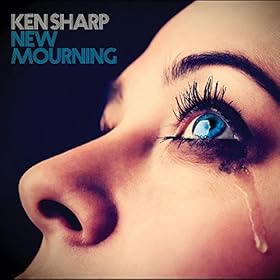
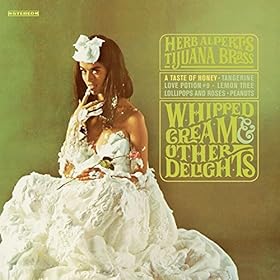
New MourningWhipped Cream & Other Delights

Welcome back once again to another exercise in The Best Three Hours Of Radio On The Whole Friggin' Planet!  This week's invigmoratin' edition of This Is Rock 'n' Roll Radio with Dana & Carl proudly presented brand-new music from The Jeremy Band, Ken Sharp, The Pondhawks, and The Forresters, and we gave each that always-coveted TIRnRR Seal O' Approval.  And then we surrounded all of 'em with more (otherwise) peerless pop, and we saw that it was good.  It's what we do!

NEXT WEEK:  The long-awaited return of The Meghan & Dana Show, as my daughter will once again match wits and records with my able co-host.  IN TWO WEEKS:  Well...! We may pre-record a show, or we may just leave you hangin', friends.  But either way, we ain't here.  Where will we be?  We'll be at...

...BRIGHT LIGHTS! The Syracuse New Wave Rock 'n' Roll Reunion takes place Sunday, July 3rd at Funk N' Waffles at 307-313 South Clinton Street in Syracuse.  Show starts promptly at 7 pm, with Maura & the Bright Lights, Tom Kenny, The Flashcubes, The Trend, The Dead Ducks, Screen Test, and a tribute to the late Norm Mattice, performed by The Richards.  Details of this irresistible event can be found here:  http://carlcafarelli.blogspot.com/2016/06/bright-lights-press-release.html  And $12 advance-sale tickets can be had at https://funknwaffles.ticketfly.com/event/1195607-bright-lights-syracuse-new-syracuse/  Your hosts are Dana & Carl, and we hope you'll join us! But for now, this is what rock 'n' roll radio sounded like on a Sunday night in Syracuse this week.

This Is Rock 'n' Roll Radio with Dana & Carl streams live (almost) every Sunday night from 9 to Midnight Eastern, exclusively at www.westcottradio.org

TIRnRR # 831:  6/19/16

THE RAMONES:  Do You Remember Rock 'n' Roll Radio? (Rhino, End Of The Century)
--
THE JEREMY BAND:  Love Is Everywhere (JAM, Hit You With A Flower)
THE YARDBIRDS:  Over Under Sideways Down (Airline, Roger The Engineer)
ARS NOVA:  General Clover Ends A War (Rhino, Ars Nova)
THE MONKEES:  Me & Magdalena (Rhino, Good Times!)
THE MONKEES:  Daddy's Song (Rhino, Music Box)
THE BEACH BOYS:  Good Vibrations (Capitol, Good Vibrations)
--
KEN SHARP:  Let's Be Friends (616406, New Mourning)
WARREN ZEVON:  Werewolves Of London (Rhino, Genius)
SWAG:  Lone (Yep Roc, Catch-All)
THE SINCEROS:  Take Me To Your Leader (Cherry Red, The Sound Of Sunbathing)
CHEAP TRICK:  No Direction Home (Big Machine, Bang Zoom Crazy...Hello)
NICK LOWE:  Cruel To Be Kind (Yep Roc, Quiet Please...)
--
THE FORRESTERS:  On My Way (n/a, The Forresters)
THE CURE:  Boys Don't Cry (Rhino, Three Imaginary Boys)
THE DRIFTERS:  On Broadway (Atlantic, All-Time Greatest Hits & More)
WALTER LURE & THE RAMONES:  Street Fighting Man (Jungle, JOHNNY THUNDERS & THE HEARTBREAKERS:  Down To Kill)
SCREEN TEST:  Not Today (unreleased)
THE ZOMBIES:  She's Not There (Varese Vintage, The BBC Radio Sessions)
--
TOMMY GUNN:  Bye Bye Bye (Formula Free, Alien Moon)
THE FLASHCUBES:  It's You Tonight (Northside, Bright Lights)
JONI MITCHELL:  Free Man In Paris (Reprise, Hits)
PAUL McCARTNEY:  Maybe I'm Amazed (Apple, McCartney)
HANNAH CRANNA:  Paul McCartney And Wings (Big Deal, Hannah Cranna)
THE BEATLES:  Eight Days A Week [false start]/Eight Days A Week (Apple, Anthology 1)
--
THE WONDERS:  That Thing You Do! (Play-Tone, VA:  That Thing You Do! OST)
THE HOLLIES:  Look Through Any Window (EMI, Clarke, Hicks & Nash Years)
IAN HUNTER:  Cleveland Rocks (Chrysalis, Shades Of Ian Hunter)
DAVID BOWIE:  Queen Bitch (Virgin, Bowie At The Beeb)
THE BONGOS:  Space Jungle (Razor & Tie, Numbers With Wings/Beat Hotel)
ROCKPILE:  Heart (Columbia, Seconds Of Pleasure)
--
THE PONDHAWKS:  Blue Light (Riverpool, Blue Light)
G.C. CAMERON:  Act Like A Shotgun (Light In The Attic, VA;  Our Lives Are Shaped By What We Love)
THE EVERLY BROTHERS:  Love Hurts (Warner Brothers, Walk Right Back)
THE MARVELETTES:  Too Many Fish In The Sea (Motown, The Best Of The Marvelettes)
TAMMY & THE LORDS OF MISRULE:  Camellia Chameleon (Her Highness Porcupinus, King Maker)
THE GO-GO'S:  Head Over Heels (IRS, Return To The Valley Of The Go-Go's)
--
ARVIDSON & BUTTERFLIES:  Part Of The Past (Kool Kat Musik, Arvidson & Butterflies)
CLOCKWORK FLOWERS:  A Little Respect (Clockwork Flowers, Colours Vol. 2:  Blue)
THE MONKEES:  You Bring The Summer (Rhino, Good Times!)
MARTHA REEVES & THE VANDELLAS:  (Love Is Like A) Heat Wave (Motown, The Best Of Martha Reeves & The Vandellas)
RAY PAUL:  Pretty Flamingo (Permanent Press, Whimsicality)
THE LEFT BANKE:  Pretty Ballerina (Mercury, There's Gonna Be A Storm)
--
THE RICHARDS:  Who Would've Thought (Northside, Over The Top)
THE SMALL FACES:  Son Of A Baker (Immediate, Ogden's Nut Gone Flake)
THE MONKEES:  Birth Of An Accidental Hipster (Rhino, Good Times!)
THE KINKS:  I'll Remember (Essential, Face To Face)
1.4.5.:  Your Own World (Beautiful Sounds, Rhythm N' Booze)
THE PRETENDERS:  Stop Your Sobbing (Sire, The Singles)
THE MONKEES:  Love's What I Want (Rhino, Good Times! [Japanese release])
THE MONKEES:  Me & Magdalena [Version 2] (Rhino, Good Times! [digital release])
HERB ALPERT & THE TIJUANA BRASS:  A Taste Of Honey (Shout Factory, Whipped Cream & Other Delights)

Sunday, June 19, 2016

Tonight on THIS IS ROCK 'N' ROLL RADIO

Time is the enemy!  Lotsa new stuff arrived this week, but with little opportunity to actually, y'know, listen to it.  But I betcha we'll find time tonight for new music from our pal Ken Sharp, new music from The Jeremy Band, new music from The Forresters, and new music from The Pondhawks. We'll likely continue with recent Fave Raves from The Well Wishers, Tommy Gunn, and The Monkees, among others, plus perennials from...well, we'll just see what time allows, won't we?  Time has the numbers, but we have the will, so join us for a glorious collision Sunday night, 9 to Midnight Eastern, www.westcottradio.org  If you have the time, of course. 

Saturday, June 18, 2016

Father's Day: Robert Cafarelli, 1919-2012


My Dad was born on October 1, 1919, and he passed away on April 18, 2012.  This is the eulogy I delivered at his funeral.  Happy Father's Day, Dad.  I still thank you for the days.

My Dad was an amazing man.  Yeah, everyone here already knows that, but I never get tired of saying it.  For me, for my brothers Art and Rob and my sister Denise, it has always been a great point of pride that our parents were Bob and Jean Cafarelli.  I remember my first visit to Yankee Stadium in 1972, and how Dad being who Dad was, the doors just magically opened for him wherever he went.  So we found ourselves in the Yankees locker room on Old Timer's Day, and we got to meet Mickey Mantle and Whitey Ford and Dad's own hero, Joe DiMaggio.  One person there, puzzled by how a 12-year-old kid got into that locker room to begin with, asked me who I was.  Puffed up with pride, I answered, "I'm Bob Cafarelli's son."  There was a brief pause, and then the guy said, "Who's Bob Cafarelli?"

"Who's Bob Cafarelli?"  Can you imagine?  That's like saying you don't know who Santa Claus is.  Here in Syracuse, everyone knew Bob Cafarelli.  Doors opened for him everywhere he went, and people greeted him everywhere he went, and people were always happy to see him, everywhere he went.  He wasn't famous, he wasn't rich, but he was more important around here than any celebrity you could name. Everyone loved Turnaround Bob, and they loved him for who he was:  a hard-working, gentle, generous, loving and outgoing man who always, always gave his best to everyone and everything.  And he'd do it, always, with a joke, with a smile, and with a song.  Doors opened for him because he had earned the respect, the admiration and appreciation of so many people who loved him.

So my brothers and sister and I always felt special that this was our Dad.  But it turned out that we weren't the only ones who could call him Dad.  He was Dad to my wife Brenda.  He was Dad to Art's wife Patti.  He was Dad to Rob's wife Barb, and to Denise's husband Tony.  There was never any such thing as "in-laws"--just family.  And family expanded in all directions:  Dad called my Mom's parents "Mom and Dad," and he meant it.  My Mom's brother and sister, my Uncle Carl and Aunt Betty, were likewise my Dad's brother and sister, and so were their spouses, my Aunt Jo and Uncle Charlie.  There are no dividing lines in family.  It didn't matter if you were a Cafarelli, Ventura, Williams, Huniford, Bubniak, Walker, Dees, Nuremberg, or any other name, because the names didn't matter; they never mattered.  You were family.  I learned that from my Dad.  And if you weren't family, but you were still hanging around, well then, you were a friend, and friends are just like family.  I learned that from my Dad, too.

As his final act of generosity, Dad left his organs to anatomical research, so that others may still benefit--another gift from the man with the biggest heart Syracuse has ever seen.  When my Dad got sick, and people came to visit and chat and hear his stories one more time, many of them would look at me and say, "You look just like your Dad."  And that is the nicest thing that anyone could ever say to me.  What could be better than being like Bob Cafarelli?  What an amazing man.  What an amazing, exceptional man.  And he was my Dad.

As we say goodbye, I find myself thinking a lot about the words to a beautiful, beautiful song written years ago by a man named Ray Davies.  This is called "Days."


Thank you for the days
Those endless days, those sacred days you gave me
I'm thinking of the days
I won't forget a single day, believe me

I bless the light
I bless the light that lights on you, believe me
And though you're gone
You're with me every single day, believe me

Days I'll remember all my life
Days when you can't see wrong from right
You took my life
But then I knew that very soon you'd leave me
But it's all right
Now I'm not frightened of this world, believe me

I wish today could be tomorrow
The night is dark, it just brings sorrow
Let it wait

Thank you for the days
Those endless days, those sacred days you gave me
I'm thinking of the days
I won't forget a single day
Believe me

Thanks, Dad

Friday, June 17, 2016

On Broadway

Leslie Odom, Jr. in Hamilton
This year, for the first time in many, many years, I watched the Tony Awards broadcast.

I don't watch a lot of awards shows.  Neither the Oscars nor the Emmys hold any interest for me; I record the Grammys and the American Music Awards, but I fast-forward through the looooong stretches of each that bore me to tears--left to my own devices, I can watch a three-hour Grammy or AMA show in twenty to thirty minutes, maybe forty minutes, tops.  Middle-aged power pop fans are just not the target demographic of these shows.

But one of the things that did catch my interest on this year's Grammys was the performance from the Broadway sensation Hamilton.  Honest to God, I just thought it was captivating.  So I tuned into this year's Tony Awards show to try 'n' soak up a bit more of that Hamilton buzz; and, more specifically, my wife Brenda and I wanted to root for Leslie Odom, Jr., the actor who plays Aaron Burr in Hamilton.  Now, we've never actually met Leslie; but--a very long time ago--we knew his Mom and his Dad.

First, a bit of background about me and The Great White Way.  I've spent a lot of time writing about rock 'n' roll, punk, bubblegum, pop, and power pop.  It may surprise some to learn that someone like me--whose all-time favorite musical acts are The Beatles, The Ramones,The Flashcubes, The Kinks, and The Monkees--also loves Broadway.  But there were always Original Broadway Cast albums around the house when I was a kid, so I was exposed to this music, immersed in it, since even before John, Paul, George, and Ringo paid that first visit to ol' stoneface Ed Sullivan one Sunday night in '64.  As a toddler, I would accompany my parents on shopping trips to J.M. Fields or K-Mart, and I'd randomly sing snippets o' show tunes while sitting in the shopping cart.  This could border on the awkward and embarrassing, like when I would suddenly bellow, Here's to the son of a B--tra la! from Carnival, or re-enact the domestic quarrel scene from Gypsy, concluding that I was gettin' my kids and gettin' out.  Hello, Child Protection?  Yeah, there's this kid in the department store, and you won't believe what's comin' outta his mouth...!


West Side StoryThe Music ManCamelotFunny GirlCarousel.  And, my favorite, Carnival.  I heard all of these, and many more, and they were ultimately as much a part of my formative musical alchemy as the British Invasion and The Monkees.  The lure of rock 'n' roll was ultimately too much competition for musical theater to withstand, but I never exactly stopped loving Broadway, either.  I've never seen a play on Broadway, but I did see an Off-Broadway production of Jesus Christ Superstar in 1973, and I saw Wicked in London's West End in 2010.  I've seen many, many local theatrical productions, both professional and amateur; Brenda and I have even been known to attend high school musicals, and I mean high school musicals where we didn't know any of the student performers--we were just there to enjoy the play.

This ongoing love of music and musicals also led me to a short-lived TV series called SmashSmash ran for two seasons, from 2012 to 2013, and it was kind of a mess, really.  But it had its moments, and I never missed an episode.  And I noticed an actor who had a recurring role on Smash, and I called Brenda in while I watching him on the show.  Hey, Bren.  This actor's name is Leslie Odom, Jr.  It could be a coincidence, but damn--doesn't he look a little like Les?

I met Les Odom in college at Brockport, in Spring of 1979, I think.  Les was friends with a couple of the guys I lived with, Truck Thacker and Ray Ramos, so I saw Les here and there in our dorm suite--partying, kibbitzing, listening to music (with The O'Jays' live "Wildflower" a particular favorite, as I recall).  Les was from Queens, so he was on the school's charter bus to New York City during Spring Break; I was also on that charter bus, accompanying Brenda back to Staten Island, where I would be meeting her parents for the first time (and, of course, also making a side trip to see The Flashcubes play on the Bowery).  That bus trip was a bacchanalia on wheels, a mobile version of dorm life, and enough fun that I only minded a little when all these downstaters kept putting down my home town when the bus passed through Syracuse.  You call this a city?  Man, this ain't even big enough to be a borough!

(And this may be a case of my memory rearranging facts to suit my narrative, but I do believe it was Les who said, Naw, man--come on!  It seems like a nice place.  Leave CC be!)

When I graduated from college in 1980, I decided to stay in Brockport while Brenda completed her studies.  We got an apartment in the village, and were surprised to discover that Les and his girlfriend, Yvette Nixon, were also living in the same small complex, Villager Apartments.  We were never really tight, but we renewed our friendship nonetheless, and spent some time hanging out over the course of that summer. I have a specific, vivid memory of Yvette making dinner for us in their apartment one night, and we spent a lovely evening drinking and partying, alternating between watching Ted Kennedy's firebrand speech at the Democratic National Convention and listening to James Brown's Live At The Apollo LP.  I remember it as a happy, happy time.


But Villager Apartments didn't seem to remain a happy place for Les and Yvette.  Brenda and I both remember them as a really cool, very nice couple, and we all got on quite well.  But Villager's manager, Pete--who lived next door to Brenda and I, and was also a friend of ours at the time--may not have shared our affection for Les and Yvette.  It may have been racial (which is an easy stone to cast, even when it's not true), or it may have been a simple matter of friction between tenants and an apartment manager.  I didn't see any of it.  All I know is what Pete told me: that Les was banging on Pete's door late one night, presumably to report a problem with Les and Yvette's place, and Pete opened the door and pointed a gun at Les.  Les shouted, No, Pete!  It's me--Les!  No shots were fired, and no one was hurt, thank God.  But Les and Yvette moved out not long after that.  We never saw them again.

When we saw this Leslie Odom, Jr. on Smash, we knew in our hearts he had to be Les' son.  Had to be.  Odom's a common name, but the resemblance was strong enough.  Now, Les was a big guy, and Leslie, Jr. didn't seem to be as physically large--well, on TV, anyway.  But Yvette was of slighter build, so it was plausible. I did the Google Stalk thing that everyone does now:  Leslie Odom, Jr. was born in August of 1981 in Queens--roughly a year after we'd last seen Les and Yvette, and in Les' home town.  But no matter how much we researched, we couldn't confirm the identities of this actor's parents.  Well, yeah, we knew his father was Leslie Odom, Sr--we are indeed that well-versed in the time-honored art of deduction--but we didn't know his mother's name, and we couldn't say with absolute certainty that his Dad was the Les we used to know.

When we saw the performance from Hamilton on this year's Grammys telecast, we noticed Leslie Odom, Jr. in a prominent role.  The performance was intriguing; the idea of "a hip-hop musical" wasn't intrinsically attractive to me, but this seemed so powerful, so well-executed, so goddamned irresistible, that it just knocked me out, man.  My budget wasn't likely to accommodate a trip to New York and Hamilton tickets any time soon, but I kept my eyes open for further TV glimpses.  Everyone knew Hamilton was going to dominate the Tonys.  And that meant Brenda and I were going to watch the Tonys.

The awards show itself was amazing, actually.  Host James Corden was fantastic, the comedy bits and musical numbers were endlessly engaging, and--unlike the Grammys or the AMAs--I never felt like fast-forwarding through anything except the commercials.  It was a thoroughly enjoyable evening of television.  Watching the scene from Hamilton, I found myself mesmerized; the only comparison I could think of was The Beach Boys' masterpiece Pet Sounds; not because Hamilton is in any way reminiscent of Pet Sounds, but simply because that's what comes to mind when something is as good as it gets, nonpareil, a summit of achievement and accomplishment.  Tough to make that pronouncement based on a couple of numbers seen on a 32" TV screen, but screw objectivity anyway.  There was a giddy joy in surrendering to the moment, and letting it sweep all cynicism away.

When it came time to award the prize for Best Actor In A Musical, we knew that Leslie was up against Hamilton's creator and star, Lin-Manuel Miranda, and we figured Miranda was a lock. But Leslie won!  We whooped and hollered as if he were one of our own.  And, in the conclusion of his acceptance speech, Leslie, Jr. acknowledged, "Leslie Odom, Sr., Yvette Odom, and Elizabeth Odom taught me well as well."

And there it was.  Confirmation!  I'm not embarrassed to admit that Brenda and I both screeched like young teens at a One Direction show. And we're pretty sure we saw Les--Les, Sr.--in the audience, pumping his fist in jubilation, proud of his son. It felt so damned good.

They say the neon lights are bright on Broadway.  Sometimes that harsh glow can be blinding, too much to take in; but sometimes, there really is magic in the air.  That magic can manifest in music and art, and also in friendships long gone, but still remembered fondly.  That glitter never rubs off.  It never will.