[The following piece was co-written by Gary Pig Gold and me for John M. Borack's way-fab 2007 book Shake Some Action, but was not included in the book. It has remained unpublished (except for a Facebook posting) until now. I've always liked this a lot, and I've wanted to share it with...someone! Gary gave his blessing to post it here, so enjoy. This is copyright 2016 Carl Cafarelli and Gary Pig Gold.
(Or not....)
Fresh from their infamously great Monkees / Bubblegum debate of 2001, the diatonically dynamic duo of CARL CAFARELLI and GARY PIG GOLD return, with their ears to the underground and their heads in the sky, to ask that eternal musical question,
CC: What was the very first Power Pop record?
GPG: Or, should we say, Which came first? The Rickenbacker or the egg?
CC: I guess the question becomes rhetorical as soon as you understand that there probably isn’t even a true consensus on the definition of Power Pop, let alone any wide agreement on what exactly was the first power pop record.
GPG: THAT’S for sure. Attaching a concise, yet all-encompassing meaning to the words “Power Pop” – one that, by the way, doesn’t alienate anyone out there who’s (a) female, (b) under forty, and (c) doesn’t spend every spare minute seeking out mint condition Badfinger 45s – has been keeping the virtual Audities List for starters alive for nigh on a near decade already!
CC: And Lordy, we aren’t even certain WHEN to begin the investigation, as some folks say power pop started in the Sixties, and some say adamantly that it’s a Seventies phenomenon; some may even try to put the genre’s origin at an earlier or later date.
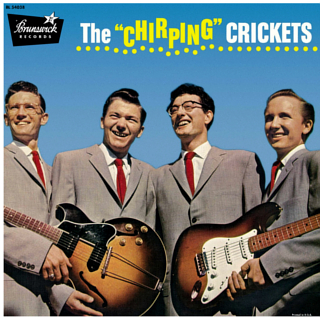
GPG: Personally, I most definitely go with “earlier,” Carl. As in the precise moment producer Norman Petty counted off his very first “That’ll Be The Day” session with Buddy and those Crickets. But we’ll get to that in a minute.
CC: So then, we’re pretty much screwed if we’re looking for an easy agreement on pinpointing Ground Zero for power pop. But let’s have a bash at it anyway!
GPG: Flagrant subliminal reference to Mister International Pop Overthrow Festival duly noted, sir. Continue.
CC: First, let’s get some possibly academic stuff outta the way, alright? Pete Townshend is generally credited with coining the phrase “Power Pop,” which he used to describe his music with The Who, as well as the music of The Small Faces and “Fun, Fun, Fun”-era Beach Boys.
GPG: Let’s just make note here, however, that most every single catchphrase and/or socio-musical innovation of import that passed through Pete’s cannabis-encrusted lips back in them salad daze can be directly attributed to his brilliant mentor/svengali-slash-co-manager Kit Lambert, just remember.
CC: I guess we can also then blame Kit for Tommy as well?
GPG: Well, SOMEONE has to! Go on…
CC: Writing in Bomp! magazine in 1978, Greg Shaw and Gary Sperrazza! put together a fascinating study of power pop, tracing its origin to the mid-Sixties work of The Kinks, The Easybeats and, especially, The Who. Shaw picked The Who as the first Power Pop band -- ignoring the fact that The Kinks predate The Who -- and mentioned a few precursors: Eddie Cochran. The Rolling Stones. Phil Spector. The Beatles. Though acknowledging their rockin’ pop efforts, Shaw discarded each of these in his attempt to chronicle the true beginning of power pop.
GPG: I can state as an almost-fact that when Greg hit Toronto in very early 1978, he was most impressed indeed with that amazing proto-punk and/or (power) pop combo Teenage Head who, in their sets then, performed blistering versions of classic Swinging Blue Jeans and, yes, Eddie Cochran tunes. Greg then got kinda, um, sidetracked during that trip by the B-Girls …but then, who didn’t back then?
CC: They did put the hubba-hubba in Hubba Bubba Bubblegum, didn’t they? And I agree with Shaw about the Stones (their blues and R&B roots set them apart from power pop, though they were certainly one hell of a great pop band too), Eddie Cochran (close, but not quite explosive enough in sound) and Spector (almost perfect -- a pop Wall Of Sound, but not primal enough)…
GPG: “Not primal enough”??! Carl, remind me to sit you down with a good pair of headphones and Disc Two of the Spector Sessions box-set as soon as we’re done here. Sheesh!
CC: Oh, Spector’s stuff had the Power AND the Pop, for sure — you’ll get no argument from me on that point. But I’m gonna remain a stickler and insist that it’s not power pop, per se.
GPG: [raises eyebrows quite skeptically indeed]
CC: For starters, the tempos are generally too leisurely. “Da Doo Ron Ron” comes closest, but even this full-throttle number keeps itself in check. never threatens to go over the top. And that leads to the second point: the transcendence of Power Pop is that everything’s just about ready to burst, to lose control entirely —but Spector was all about control.
GPG: Among other things…
CC: His productions were massive, sprawling, HUGE …but every note was in its precise spot, every nuance was painstakingly planned, and you can actually hear the level of control in place. The one time Spector worked with a bona fide power pop group — The Ramones, much, much later — he diluted their power rather than enhancing it.
GPG: I guess he really should’ve just produced a Joey Ramone solo album after all then, as I believe was the original intent.
CC: And finally: where’s the friggin’guitars?! Spector used guitars,but they weren’t his dominant instrument, nor should they have been. As even your own Rickenbacker vs. Egg comment alludes to above, the guitar is the primary instrument of power pop.
GPG: Geez, I’m hoping even ONE of us now gets a free Ricky 12-string at least, what with all of this gratuitous product placement!
CC: But Spector wasn’t interested in inventing power pop. He wanted an irresistible, radio-ready Wall Of Sound, and he succeeded — but there ain’t no such thing as orchestral power pop.
GPG: Again, I hand you my best set of phones and an iPod starring, yes, Ike and Tina’s “River Deep Mountain High” …plus “Wouldn’t It Be Nice,” “Back Seat Of My Car” even, and just about everything off that first Left Banke album.
CC: Of course there’s no way to ignore Lennon, McCartney, Harrison, Starr and producer George Martin. Power pop --melodic rock ‘n’ roll, played fast and hard but remaining solidly, unerringly pop -- begins with The Beatles.
GPG: Well, if you weren’t listening to AM radio before 1963, I suppose . But come on (come on), come on (come on), as the Fabs themselves later wailed: The template for John, Paul and George, not to mention most every other original British Invader, were The Crickets. In particular their legendary 1958 U.K.tour, for which most each and every English musician who made records during, and had an impact upon, the Sixties had proud front-row tickets to. Why, even John Lennon Himself (or was it just Philip Norman, speculating post-December 8, 1980?) realized the effect Buddy and his band had on all the nascent British popsters back then. Some even say a big part of the Crickets’ initial appeal to, and more importantly perhaps their English audience’s identification with, was that Holly actually LOOKED British, unlike the decidedly more raw and “ethnic” Presley and other early American rockers. And John for one just must have surely noted the subliminal double-meaning, appreciated by Brits only, in the very name “Crickets” (as in England’s home sport). The Chief Beatle’s also on record, as on that marvelous Vee Jay elpee Hear The Beatles Tell All, that he fashioned the name “Beatles” as he was looking for something crawly and bug-like as in, you guessed it, “Crickets.”
CC: I’d readily agree that The Crickets were the template for the classic 1960s band, even though their most notable work was done prior to the night the music died in 1959. Two guitars, bass, drums: it remains the preeminent model for a pop-rock combo, and the specific blueprint for everyone from The Shadows and Beatles to, dare I say it, KISS.
GPG: Well, Simmons and Co. DID cover a genuine Dave Clark Five power pop song, didn’t they? And no, I promise not to bring up “Beth” if you don’t. Anyways, after those U.K. Cricket concerts, one can surely imagine Lennon, McCartney, Jagger, Richard(s), and Townshend even closely pouring over such Fifties-recorded, yet inarguably Sixties-SOUNDING Holly/Petty creations like “Think It Over,” “Listen To Me,” “It’s So Easy” (…stop me, Carl: I could go On and ON).
CC: And here you didn’t even mention “Rave On,” which I think comes the closest to power pop among the gems in the Buddy Holly songbook (with an honorable mention to “Love’s Made A Fool Of You,” “Crying, Waiting, Hoping” and each and everyone of the great Holly records you named). I love Buddy Holly. My wedding song was a Buddy Holly song (“True Love Ways”).
GPG: Better that than “Maybe Baby,” but never mind…
CC: Nonetheless, while Buddy ranks high among power pop’s early influences, he didn’t make power pop RECORDS. Even “Peggy Sue,” which is certainly manic enough — and HOW! -- in its rockin’ approach, isn’t quite Power Pop; it doesn’t marry the melody, the sound, the aggression, the chaos and the harmony like a hypothetical perfect power pop prototype oughtta.
GPG: Too bad the vintage Crickets never made a live album then …and one can only imagine what Buddy would’ve come up with – on stage AND in the studio – if he’d lived even five years longer into Beatlemania. But on this subject of Merseybeating Roots, even the most casual student or listener can uncover many, many other stepping stones therein to Power Pop as well. To name only the most obvious examples? The Everly Brothers, vocally, and the Brill Building songwriters in particular, who held an undeniable sway over most each and every pre-’64 Lennon/McCartney composition.
CC: There again, influence does not equal invention. The early Beatles repertoire included covers of Carl Perkins, “Till There Was You” from “The Music Man” AND (live at the Star Club!) Marlene Dietrich’s “Falling In Love Again”…
GPG: …talk about pandering to one’s Germanic audience!
CC: …but none of those are gonna turn up in any real-world listing of Power Pop touchstones. Think about rock ‘n’ roll itself: The Nat King Cole Trio and Bob Wills and his Texas Playboys were enormous early influences on rock, and Elvis Presley’s favorite singer was Dean Martin. Yet none of those should be considered rock ‘n’ roll acts, their influence on rock’s development notwithstanding.
GPG: Well, I cited the Everlys and Brills only as potent influences upon the Beatles’ development as instrumentalists, vocalists, and especially as songwriters. A different kettle-o-carp entirely from their plundering old Sun Sessions and Broadway musicals simply to pad out all-nighters in Hamburg, or America-only LP collections.
CC: So as we can see, The Beatles didn’t get to Power Pop immediately. You don’t really hear it in their very earliest recordings, in either that lo-fi cover of their Buddy’s “That’ll Be The Day” or the stuff they did with Tony Sheridan.
GPG: Damn! You’re gonna tell me Tony Sheridan didn’t invent Power Pop??!
CC: The sound and the spirit’s not even entirely evident yet on that very first fully Fab 45, “Love Me Do”/”P.S. I Love You,” both sides of which serve up decent, late Fifties-early Sixties shufflin’ rock without threatening to push the needle into the red.
GPG: Still, we know the supposedly savage young Beatles were already writing and performing pure pop such as “Hello Little Girl” and “Ask Me Why” in all those Liverpool via Hamburg spit dives, and those two vintage ditties smack most decidedly of Everlys/Holly (“Hello Little Girl”) and Goffin/King (“Ask Me Why”).
CC: Still, the topside of the Beatles’ second single, “Please Please Me,” seems to have come out of nowhere. Faster tempo, amazing energy, lethal hooks and swooping, swoon-worthy harmonies, delivered with a self-assured gusto that presages all who would follow -- Eric Carmen was certainly taking notes.
GPG: To say nothing of Doug Fieger (nudge nudge wink etc.)
CC: Plus, it’s got certifiably teen frustration lyrics, and a picture-perfect power pop ending.
GPG: Not to mention harmonies lifted directly from Don, Phil, and Cathy …as in “Cathy’sClown”! Also, I’d have to credit said frustration squarely to Roy Orbison, upon whose “Only The Lonely” John claimed “Please Please Me,” in its original pre-George Martin incarnation, was modeled. And speaking of Sir Big George M., I’d also place that ultra-cool ending firmly under his column as well. He was quite the arranger; an absolutely integral part of the Beatles’ magic, who most fortunately treated the recording studio more like a workshop or even playhouse …precisely as Norman Petty did with the Crickets as well, not coincidentally.
CC: The Beatles continued to run with this new genre on their next few singles (“From Me To You,” ”Thank You Girl,” certainly “She Loves You,” absolutely “I Want To Hold Your Hand”), but Power Pop starts right here --The Beatles invented it with “Please Please Me.”
GPG: With a little help from their friends at least then, you’d be willing to concede Carl? And you know, we haven’t even started to mention Arthur Alexander, Del Shannon, and Motown -- Smokey Robinson especially (John’s primary songwriting beacon throughout ’63) and of course the Girl Groups, Shirelles in particular (who had TWO – count’ em! – of their songs covered on that very first Beatle LP).
CC: We also haven’t really mentioned The Beach Boys, whom Pete Townshend referenced when originally discussing Power Pop. But Pete was wrong; The Beach Boys were another great pop band that falls outside the strict parameters of a power pop definition. Unlike a lot of other pop music journalists, I think you and I both adore The Beach Boys’ music before, during AND after “Pet Sounds” and “SMiLE,” but I don’t regard any of their records as Power Pop. Some may disagree…!
GPG: Including yours very truly! But let’s move on and out of those Swinging Sixties for now, shall we?
CC: Fair enough. While you and I have traced the origin of power pop to the Fifties and Sixties respectively, the phrase didn’t really come into any kind of general use until the late Seventies, when it was applied to some of the post-punk new wave bands and, retroactively, to some earlier Seventies bands like the Raspberries, Badfinger and Big Star. I know Greg Shaw specifically and firmly excluded Badfinger from his idea of power pop, but I can’t agree with that. Granted, Badfinger had a lot of the boogie tendencies that were unfortunately so common among rock bands in the Seventies, but “No Matter What” and “Baby Blue” were the absolute epitome of Power Pop.
GPG: Not to mention Badfinger as a whole remain the still-shining example of precisely what NOT to do when hiring an agent, signing to a record label, touring the United States, moving ones significant others into the communal Band House, signing ones name to ream upon ream of extremely questionable managerial and publishing documents…
CC: There can’t be any such boogie cloud cast over the Raspberries, though. “Go All The Way,” “I Wanna Be With You,” “Tonight,” “Ecstasy” — urgent, insistent songs about getting laid, delivered with a bouncy melody, driving guitars, a swaggering confidence and infectious Ooooooooohs! There’s your Power Pop primer right there.
GPG: Did I ever tell ya about the time I was (illegally) fly-posting the Cal State Long Beach campus with gig notices for MY -- quite authentically P. Pop, by the way!-- group The Loved Ones, circa late-period Plimsouls, and chanced upon a cool little band playing on the floor in the cafeteria? I walked up to the guitarist who was, I swear, wearing an authentic Monkees t-shirt – and this was as close to blasphemy in 1982 as pulling out a Huey Lewis cassette in the car, believe you me – only to discover his name was, wait for it, Scott McCarl! He proudly handed me a copy of his band’s do-it-yourself 45 (…sorry folks, it ain’t going anywhere NEAR eBay) and when the chit-chat inevitably veered towards Raspberries, Scott made what I thought to be the defining comment on the subject. And I quote: “you know, Eric Carmen never could figure out if he wanted to be Paul McCartney OR Brian Wilson.” So there!
CC: Point taken. Big Star’s a tougher call, though.
GPG: Big Star’s actually a tougher EVERYTHING, Carl!
CC: Most fans consider them to be a Power Pop act; Shaw certainly did, and I do,too. But I can’t justify it on paper. For the most part, Big Star’s songs don’t rock very hard, and they don’t convey that almost-outta-control feeling that I think is an integral part of power pop.
GPG: Good thing Phil Spector didn’t try to produce ‘em, huh? Honestly, I tend to lump Big Star – A. Chilton especially –within the same ultra-ambiguous pigeonhole I reserve for Jonathan Richman and his original Modern Lovers, not to mention our beloved Flamin’ Groovies and possibly even Cheap Trick, ABBA, and/or Lindsey Buckingham.
CC: There’s no valid critical reason that Big Star should be considered power pop …except for the fact that Big Star IS power pop. Can’t prove it. Can’t demonstrate it. But it’s true. Sometimes, you’ve gotta do what Immanuel Kant suggested (in perhaps a slightly different context) and just make that leap of faith, baby.
GPG: I just knew we’d get around to the Kant Man eventually! Thank you, Carl. Which means we must now move forward a year or two to none other than Punk, New Wave, or as I got in big trouble for calling it within the pages of The Pig Paper at the time, “White Guys Over Twenty With New Guitars.”
CC: And every one of ‘em seeking a riot of his own, of course.
GPG: Now again, I happened to be in the right place at just about the right time when, at a Troggs gig on my very first night in London during the summer of ’75, I struck up a conversation with the leader of the opening act …who turned out to be none other than Joe Strummer of the pre-Clash 101’ers. I had been quite floored – and it wasn’t just the jet-lag or my first time on Guinness either – to hear Joe’s band perform that fateful night practically the same set (of covers) that MY current high school combo was then struggling with as well, way back in the Toronto suburbs. Meaning, basically, the first Rolling Stones album with some old Who and Eddie Cochran B-sides thrown in. Joe thoughtfully explained that this phenomenon was then becoming known round greater London as “Pub Rock.” But as we all now know, such musical cage rattling was soon to become much more widely loved/loathed as “Punk,” with a simple tightening of the pant-legs and a drastic up-turn in the tempos and volume overall. Still, check out even those early Sex Pistols set lists: Small Faces, Modern Lovers, and Monkees even!
CC: Yep! If there’s no future, what’s left but the past? I wonder if Pistols guitarist Steve Jones owned a wool hat….
GPG: By the time Punk had been thoroughly emasculated for American consumption however-- primary culprits: those Pat Boones of the skinny tie set The Cars -- even a hitherto bunch’a Bowery-bred bums like Blondie could suddenly find themselves on “American Bandstand,” not to mention AM Top Tens throughout North America, with nothing but a quick surgical blunting of the rough edges, a “real” producer like Mike “Ballroom Blitz” Chapman at the controls and, in Debbie Harry’s case, a big-budget dye job and sheer white party dress as opposed to a, ugh, skinny tie. Still, “Heart Of Glass,” “Dreaming” and “Call Me,” like ‘em or not, absolutely paved the wave for the Go-Go’s, Police, Bangles, and logically on to the almost present day with the Masticators, La’s, Jellyfish, and perhaps even Puffy (Ami Yumi). And here’s your chance to plug the Flashcubes as well by the way, Carl!
CC: Oh,you and your sweet talk…! We’ll get to my beloved Flashcubes in a minute. But y’know, I don’t really dispute your chronology, nor even much of your take on it. Your comparison of The Cars to Pat Boone is amusing and accurate, I think. But, just as I don’t consider Mr. Boone to be any kind of rock ‘n’ roller, I don’t consider The Cars to be Power Pop either.
GPG: We gotta admit Ric Ocasek was absolutely brilliant alongside Pia Zadora in that possibly definitive power pop movie “Hairspray,” however. MUCH better than the Booner was in “Journey To The Center Of The Earth” even.
CC: You mentioned how punk had been “emasculated,” and that was a charge leveled against a lot of the post-punk new wavers, including the Power Pop groups. It’s a difficult charge to dismiss, since so much of what fell under those broad labels WAS diluted, relatively innocuous, fairly safe. Even if we don’t count the poseurs and bandwagon-jumpers, punk was usually at least a little bit angrier than power pop — it seems a long jump from “Anarchy In The UK” to “My Sharona.”
GPG: Especially when looking at the Billboard Hot 100!
CC: Nonetheless, a lot of great, great, GREAT power pop came directly out of punk: The Buzzcocks, Generation X and the earliest stuff by The Jam come to mind, plus the incredible “Do Anything You Wanna Do” by former pub rockers Eddie and the Hot Rods. All of these acts were part and parcel of the British punk movement, yet they made records that epitomized the very best of power pop.
GPG: Agreed. Especially regarding the Rods, and their heirs most apparent The Motors.
CC: Meanwhile back in the States, The Ramones -- the band that invented punk (with apologies to worthy precursors The Stooges, The Dictators and The New York Dolls) — well, The Ramones were always a pop band at heart anyway.
GPG: Yessss!! And our dear reader is now directed to thumb straight over to Shane Faubert’s identical thoughts on da brudders, right there in our New York Power Pop featurette herein.
CC: I’ll meet you over there when we’re done with this. The Ramones were paradoxically 100 %punk, 100 % bubblegum, 100 % pop, 100% rock ‘n’ roll. The figures don’t add up, but damn if the first three Ramones LPs don’t prove ‘em true, especially on the charting singles “Sheena Is A Punk Rocker,” “Rockaway Beach” and “Do You Wanna Dance.” The Ramones were actively influenced by acts like The Bay City Rollers, Ohio Express, The Searchers and Herman’s Hermits, plus folks you’ve already mentioned like Spector and The Beach Boys, as well as by The Who, and The Stooges, Dictators and Dolls, of course. Roll ‘em all together, and it’s Power Pop.
GPG: Which reminds me… Were Hairspray and Rock ‘n’ Roll High School ever double-featured at drive-ins across the USA, as I’d like to think they once were in my home and native Canada?
CC: Heh. Way better that than doubling Rock ‘n’ Roll High School with, say, Grease. Or with Sgt. Pepper’s Lonely Hearts Club Band….
GPG: Wait just a Pepper-pickin’ minute there, sir: Where else are you gonna see – and, more terrifyingly HEAR – George Burns tradin’ Beatle licks with Maurice Gibb??!
CC: Too much of the power pop that came after The Ramones did indeed forget to include the Power with the Pop, but a lot of acts got it right: The Romantics. The Plimsouls. Paul Collins’ Beat. And my favorites, The Flashcubes.
GPG: Here We Go then!!
CC: The ‘Cubes were an avowed Power Pop band, inspired by punk but openly influenced by the Raspberries, Badfinger and the Sixties British Invasion. They embodied the Bomp! Magazine power pop equation of Shaun Cassidy (whom they covered live) + Sex Pistols (whom they also covered live) = the power pop sound of the early Who (another live ‘Cubes staple). They wrote original tunes that lived up to their influences, and they remain today the most exciting live rock ‘n’ roll band I’ve ever seen.
GPG: Shaun Cassidy at the Canadian National Exhibition fairgrounds, hot off his (Eric Carmen-composed!) “Hey Deanie” hit, was nothing to sneeze at either though, I just must have you know…
CC: Okey-dokey — I once got in hot water with a pair of disgruntled Eric Carmen fans for stating in print that Cassidy’s “Hey Deanie” was better than Carmen’s “Hey Deanie,” though either version’s fine by me. What do I know? I’m a Bay City Rollers fan!
GPG: Ever heard Gary and the Gripweeds’ utterly “Who’s Next” take on “Rock and Roll Love Letter”? (…he asked, most rhetorically indeed)
CC: Why, I believe I have heard that! By the way, what do you think of The Knack? I’ve learned to like ‘em over the years, and now I like ‘em quite a bit, but at the time of their hit-making ascent, there was something about them that didn’t sit right.
GPG: Absolutely. I vividly recall utterly poo-poohing “My Sharona” as it sneered up the charts over that long-lost Summer of 79, making odorous comparisons to “D’yer Mak’er” to whomsoever could hear me …over their incessantly blaring Get The Knack elpees. However, I also remember picking up the Knack’s “Round Trip” long-player a few years later (for 99 cents sealed, I swear; even still, I had to sneak it up to the cash register as all my with-it pals were cooing over “Remain In Light”). I LOVE Round Trip, and even “Good Girls Don’t” is more than welcome on my homemade Power Pop Primer compilations any ol’ time.
CC: Yeah (yeah yeah), me too. It wasn’t that I disliked The Knack, exactly, but they didn’t strike me as the band ideally suited to carry the Power Pop banner. I probably resented them because they had a # 1 hit and The Flashcubes didn’t even have a razzafrazzin’ record deal (just as I resented The Cars for having hits when The Ramones couldn’t get played on the radio).
GPG: And Debby “Daughter of Pat” Boone’s “You Light Up My Life” certainly kept the likes of “I Wanna Be Sedated” off chart tops too, don’t anybody forget! Still, you know what Carl? When all is said and sung – and I think we’ve both made many a good case throughout the colorful verbiage above -- I guess I’d just have to say, with all apologies to Ted Nugent, that Pat Boone’s “Wang Dang Taffy-Apple Tango” is… The Very First Power Pop Record.
CC: There’s gotta be some kind of technicality I can manufacture to disqualify that. Next you’ll be telling me Pat Boone’s a heavy metal artist! Oh wait — bad example….